
Let Them In?
FTY LLC.Simulation
4.0585.00 Reviews
- Version
- 1.0.22
- Installs
- 1.00M
- Age Rating
- Teen
Screenshots


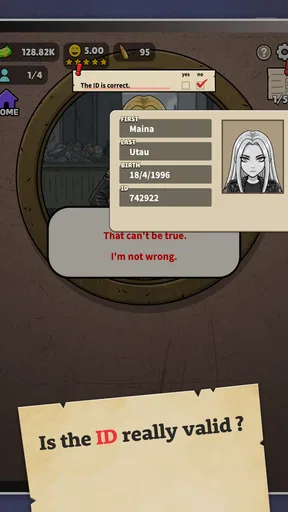
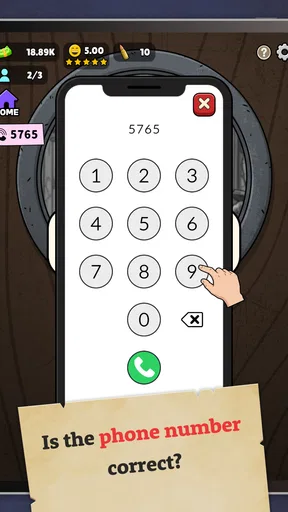
Our Review of Let Them In?
 Analysis by Appyee
I went into Let Them In? expecting a quick simulation game built around simple decisions, and that is exactly where its appeal lies. Developed by FTY LLC., it puts the player in the position of deciding who should be allowed through and who looks suspicious. The setup is easy to understand, but the small choices create enough uncertainty to make each round feel more involving than a purely passive time-killer.
This is a free game for Android, aimed at Teen players, with a choice-based format rather than the long-term construction, resource management, or character development found in many other simulation games. I would describe it as a compact decision-making experience: you observe what is presented, make a call, and live with the result. That makes it especially suitable for short sessions when I want something interactive without committing to a large campaign.
The game has attracted over a million installs and holds a 4.0 average from around thirty-one thousand ratings, which gives a useful sense of its broad appeal. It is currently listed as version 1.0.22, supports Android six and later, and can be played for free. Optional purchases range from $0.99 to $12.99 per item, so I would still approach it as a free download with possible spending rather than assuming every part of the experience is entirely cost-free.
Where players are most likely to get stuck
The first point of friction is not installation; it is learning how carefully to read each situation. A choice-based game can look straightforward because the controls are simple, yet the interesting part is deciding which detail deserves attention. If I rush through the text or rely only on the most obvious visual clue, I can make a decision that feels reasonable but turns out to be poorly judged.
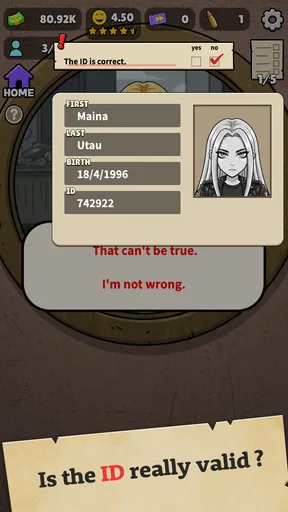
That is also what separates this game from a basic tapping title. The central action is not simply selecting the larger button or repeating one gesture. I have to pause, compare what I am seeing, and decide whether the person in front of me seems safe enough to admit. The tension comes from incomplete confidence, not from complicated controls.
New players may also wonder whether they are supposed to find one perfect answer every time. I do not think that is the healthiest way to approach it. The better mindset is to treat each encounter as a judgment call. I look for the strongest evidence, avoid inventing explanations that are not presented, and accept that uncertainty is part of the design. Trying to play as if every decision has an obvious solution can make the experience feel more frustrating than it needs to be.
The most useful early habit is to slow down before confirming a choice. I read the available information once for the general situation, then look again for the detail that could change my decision. That second pass is particularly valuable when I am playing while distracted, because the game’s premise depends on noticing small differences rather than reacting automatically.
Why the simple premise still creates pressure
The suspicious-person theme gives ordinary choices a clear consequence. I am not merely sorting objects or selecting dialogue for decoration; I am deciding whether someone should be let in. Even when the presentation remains accessible, that framing makes me question my first impression. A person may appear harmless at a glance, while another may trigger suspicion for a less obvious reason.
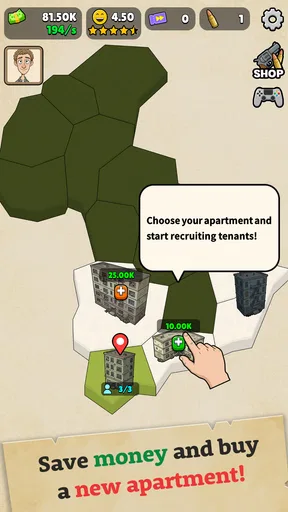
Compared with a traditional simulation game, this is much lighter on management. There is no reason to download it expecting a city builder, a farming routine, or a detailed business simulator. Its simulation label describes the act of making situational judgments, not the construction of a large persistent world. Players who enjoy checking evidence and making quick calls will probably understand the appeal faster than players looking for deep progression systems.
It also differs from puzzle games that usually present a fixed logic problem with one carefully deduced solution. Here, the pleasure is more immediate and reactive. I am making a decision inside a scenario, not solving a long chain of abstract clues. That makes it easier to pick up, although it may feel less satisfying to someone who wants elaborate puzzles with extensive reasoning.
Setup checks before blaming the game
Because the game is free to install and supports Android six or later, the basic starting point is straightforward: check that the device meets that operating-system requirement and that there is enough free storage for a new installation. I would also close demanding apps before launching it on an older phone. That is not a special requirement of this title, but it is a sensible way to avoid confusing general device strain with a problem in the game itself.
If the game does not open correctly after installation, I would begin with simple steps rather than repeatedly tapping the icon. Restarting the device, checking for an available update, and launching it again after closing background apps are reasonable first checks. If the problem appears only once, I would not immediately assume the installation is damaged; temporary system congestion can produce a one-off failure.
For players who are installing it on a shared device, the Teen content rating is worth considering before handing over the phone. That rating does not tell me how every family will interpret the theme, so I would preview the game personally if a younger player is likely to use the device. The subject of deciding who is suspicious is central to the experience, and it may not be the right tone for every child even if the controls are easy.
Another practical check is to decide in advance how you want to handle optional purchases. The game costs nothing to download, but individual in-app items are listed between $0.99 and $12.99. I would make sure the device’s purchase protections match the intended user, especially if someone else can access the account. This is less about the game’s decision mechanics and more about avoiding an unpleasant surprise after a casual session.
There is also a useful distinction between a loading issue and a design expectation. If I am looking for a long tutorial, a detailed settings system, or a large collection of management tools, I might conclude that something is missing when the game is actually doing what it was designed to do. Its strength is the immediate decision loop. Setup is successful when I can enter a scenario, understand the information in front of me, and make a choice without unnecessary preparation.
A comfortable way to begin playing
I recommend starting when I have a few uninterrupted minutes, rather than testing it during a rushed commute or while switching between several conversations. The decisions are simple enough to fit into a short break, but the game works better when I give each situation a moment of attention. Playing while distracted makes the results feel random, even when the real problem is that I missed a clue.
I also avoid treating the first sessions as a test of speed. I focus on understanding how the game presents suspicious details and how much information is normally available before a decision. Once that rhythm becomes familiar, I can play more quickly without turning every choice into a guess. This is a small but important adjustment: the game rewards attention more than frantic tapping.
Recovering when a session goes wrong
When I make a poor decision, my first reaction is usually to replay the reasoning rather than immediately restart. I ask myself whether I missed a visible detail, gave too much weight to an assumption, or simply chose under pressure. That short review turns a disappointing result into useful feedback. It also prevents me from blaming the game for every outcome I dislike.
If the app freezes, closes, or behaves strangely, I would use a gradual recovery process. I would first leave the game, close other active apps, and reopen it. If that does not help, I would restart the phone and check whether the game is running the current version. The listed version is 1.0.22, so keeping the installation current is a sensible general troubleshooting step rather than relying on an old build.
I would be more cautious about clearing app storage or reinstalling. Those actions can remove local progress in some games, and there is no good reason to take that risk as a first response to a temporary problem. I would try the less disruptive steps first and only move further if the issue continues. If the game is working but one decision went badly, reinstalling is especially unnecessary; that is a gameplay result, not a technical fault.
For interrupted sessions, I find it helpful to remember the last situation I clearly understood before the problem appeared. If the interruption happens during a choice, I avoid making a rushed selection simply to get past the screen. I reopen the game, read the scenario again, and make the decision with fresh attention. This approach is more reliable than trying to reconstruct the details from memory while annoyed.
One non-obvious trade-off is that a very short game loop can make technical interruptions feel disproportionately disruptive. In a large simulation, losing a few seconds may be insignificant. Here, the entire point is the flow from observation to decision. A pause, reload, or distraction can break that concentration. I therefore prefer playing in a stable environment, with notifications reduced when possible, even though the game itself is designed for accessible sessions.
How to improve decisions without overthinking
I use a three-step mental routine. First, I identify what the scenario is asking me to decide. Second, I separate direct evidence from my own speculation. Third, I choose the option that best fits the information actually presented, not the story I have invented around it. This keeps the game tense without turning every encounter into an exhausting investigation.
That method is particularly useful for players who tend to change an answer repeatedly. Hesitation can be valuable when it helps me notice a clue, but it becomes counterproductive when I am simply searching for certainty the scenario does not promise. Once I have checked the important details, I make the call and accept the result. The game is more enjoyable when I treat uncertainty as part of the challenge.
I would also avoid playing solely for a perfect run. A choice-based simulation is more interesting when I pay attention to how my judgment changes from one situation to the next. If I always select the safest-looking option without considering the evidence, I reduce the game to a reflex. If I take every suspicious detail as proof, I make the opposite mistake. The best experience sits between those extremes.
When the app is not the cause
Not every disappointing session points to a software problem. A weak connection, an overloaded phone, aggressive battery management, or a crowded notification panel can make any mobile game feel unreliable. If other apps are also slow or closing unexpectedly, I would investigate the device first. Restarting, freeing some storage, and reducing background activity are sensible general measures before deciding that this particular title is at fault.
Account and purchase confusion should be separated from gameplay trouble as well. If an optional item does not appear immediately, I would avoid buying it again in frustration. I would first check whether the transaction completed and whether the game needs to be reopened. The important point is to distinguish a payment issue from a decision issue: one concerns the store or account process, while the other concerns what happened inside a scenario.
There is also a compatibility question beyond the minimum operating system. A phone may technically support Android six or later and still offer a less comfortable experience if it is old, heavily restricted, or short on free space. That does not automatically mean the game is defective. If the title runs acceptably after a clean restart but struggles when many apps are open, the device environment is probably contributing to the problem.
I would skip this game if I want a deep simulation with extensive planning, a relaxing creative sandbox, or a competitive multiplayer routine. Its premise is built around judging suspicious arrivals, so players who dislike making uncertain calls may find the central loop stressful rather than entertaining. I would also look elsewhere if I need a game that can be played almost entirely on autopilot; this one is at its best when I am paying attention.
On the other hand, it is a good fit for someone who likes compact scenarios, quick decisions, and a little tension without learning a complicated control system. It can work during a short break, as a casual conversation starter, or as a lightweight alternative to more demanding simulation games. I would recommend it to a friend who enjoys asking, “Would you let this person in?” and then testing whether their first impression was sensible.
How it compares with familiar simulation alternatives
Most simulation games ask me to build or maintain something over time. I may manage money, arrange objects, develop a character, or balance several competing systems. Let Them In? takes a narrower route. Its focus is not long-term planning but the pressure of a single admission decision. That makes it easier to start and less demanding on time, but it also means there is less room for players who want a large world to shape.
Compared with a standard puzzle game, it offers less of the satisfaction that comes from mapping out a complex solution. The reward is closer to making a judgment under uncertainty. Compared with a pure casual tapper, however, it asks more of me mentally. I need to observe and interpret rather than simply repeat an action. That middle position is its clearest identity.
The trade-off is replay motivation. A player who enjoys discovering how their decisions affect the next situation may stay engaged, while someone who needs extensive customization or a visible long-term project may move on quickly. I would not judge the game by the standards of a full-scale simulation; I would judge it by whether its short decision loop remains interesting after the novelty of the premise settles.
FTY LLC. has kept the entry barrier low, which helps explain why the game is easy to recommend as a trial. The free starting point lets me decide whether the suspicious-person concept works for me before spending anything. Still, the presence of optional purchases means I would treat the free download as an invitation to sample the loop, not as a guarantee that every possible convenience or item is included without cost.
My practical verdict
After spending time with it, I see Let Them In? as a focused simulation for players who enjoy reading a situation and committing to a choice. Its best quality is the way a very simple premise creates a small amount of pressure. I do not need a long tutorial or a complicated control scheme to understand the objective, yet I still have a reason to pause before making a decision.
The main limitation is equally clear: the narrow format will not satisfy everyone. If I want a broad management game, a story-heavy adventure, or a puzzle with elaborate systems, this is not the right download. Even for the intended audience, distractions and technical interruptions can damage the short decision loop, so I get the most from it when I play with a little concentration and keep expectations realistic.
For a free Android game from FTY LLC., the combination of accessible controls and judgment-based scenarios makes it worth trying, particularly for short sessions. The Teen rating should be considered before sharing it with younger players, and purchase controls are sensible because optional items can cost from $0.99 to $12.99. Those practical details do not undermine the concept, but they are part of using the game responsibly.
My recommendation is simple: download it if you want a lightweight, choice-driven simulation and enjoy questioning your first impressions. Start slowly, read each situation twice when necessary, and troubleshoot the device before assuming a failed session is the game’s fault. If you are looking for a deep virtual world rather than a sequence of suspicious admissions, choose a more traditional simulation instead. For the smaller experience it aims to provide, though, Let Them In? has a clear identity and enough decision pressure to make a short break feel genuinely interactive.
Verdict
Strengths of Let Them In?
- Simple controls make the game easy to pick up and play.
- Short sessions suit quick breaks or casual gaming.
- The unusual concept gives it a distinctive atmosphere.
- Progression encourages experimentation with different choices.
- Runs well for players who prefer lightweight mobile games.
Limitations of Let Them In?
- The gameplay may feel repetitive after extended sessions.
- Some puzzles or decisions can lack clear guidance.
- The story may be too brief for players seeking depth.
- Limited replay value once the main content is completed.
- Occasional difficulty spikes may frustrate casual players.
Similar Picks in This Category
View All
Truckers of Europe 3
Wanda Software4.3

Town Building Life Simulator
XGame Global4.2

Fidget Toys Trading・Pop It 3D
Freeplay Inc4.7

Sculpt People
CrazyLabs LTD4.4

Scary Teacher 3D
Z & K Games4.2

Hair Tattoo: Barber Shop Game
CASUAL AZUR GAMES4.3
Frequently Asked Questions
What is Let Them In?
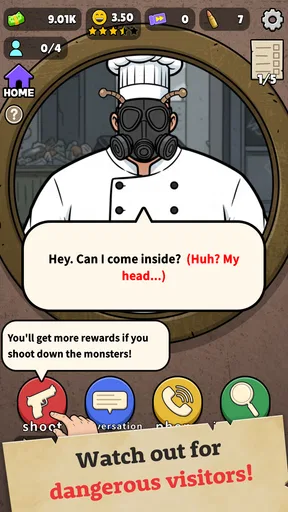
Let Them In is a suspense-focused game built around tension, observation, and decision-making. Its central premise places you in situations where you must decide whether a visitor should be allowed inside or turned away. As you progress, the game encourages you to pay close attention to details, recognize suspicious behavior, and deal with the consequences of each choice rather than simply relying on reflexes or combat.
How do you play Let Them In?
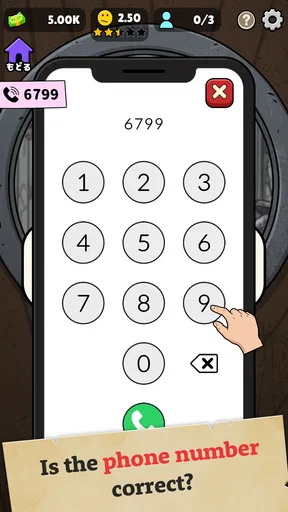
Gameplay mainly revolves around examining visitors and making careful entry decisions. You need to observe their appearance, behavior, dialogue, and any available clues before choosing what to do. The experience is deliberately slower and more atmospheric than a traditional action game, so patience is important. Small details can influence the outcome, and rushing through encounters may lead to unfavorable events or missed information.
Is Let Them In suitable for children?
Let Them In may not be appropriate for younger children because its appeal comes from suspense, unsettling situations, and psychological tension. Depending on the version and content available, players may encounter frightening imagery, disturbing themes, or moments intended to create anxiety. Parents should check the official age rating and store description before downloading, especially if the game will be played by children or sensitive users.
Does Let Them In require an internet connection?
The internet requirements can depend on the platform, version, and how the developer handles advertisements, updates, or cloud-related features. The main gameplay may be available offline in some versions, but an internet connection could still be needed for the initial download, updates, optional online services, or ad loading. It is best to review the current Google Play or App Store listing before installing.
Is Let Them In free to download, and are there in-app purchases?
Let Them In may be offered as a free download or as a paid title depending on the platform and region. A free version can potentially include advertisements, optional purchases, or limitations that are removed through a premium upgrade. Before downloading, check the store page for the exact price, in-app purchase information, and any subscription details so you understand the possible costs in advance.
Play our best games!


